


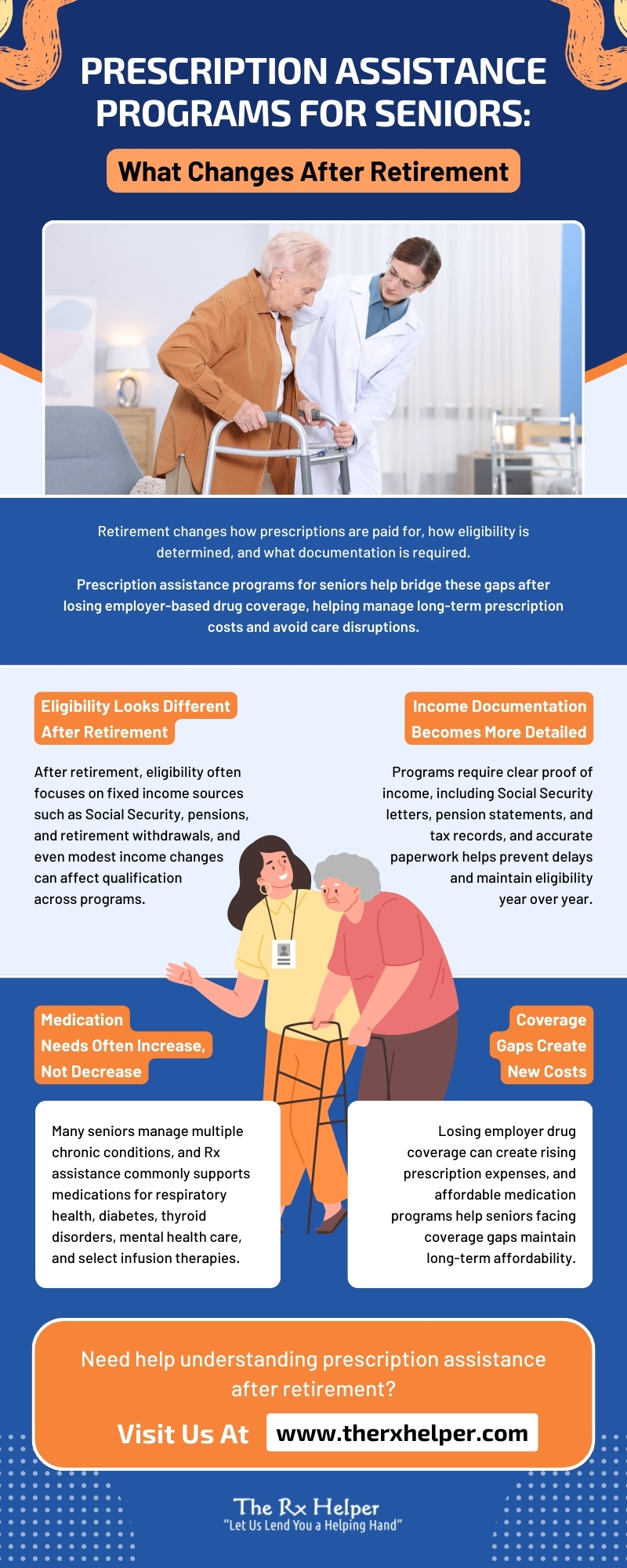
Retirement changes more than a daily routine. For many older adults, it also changes how prescriptions are paid for, how eligibility is determined, and what kind of documentation is required. Prescription assistance programs for seniors are designed to help bridge these gaps, especially for those relying on Rx assistance for seniors after losing employer-based drug coverage. Understanding how these programs work after retirement helps seniors manage long-term prescription costs and avoid disruptions in care.
Eligibility looks different after retirement
Before retirement, eligibility for assistance is often tied to employment-based insurance or household wages. After retirement, prescription assistance programs for seniors typically focus on fixed income sources such as Social Security, pensions, and retirement withdrawals.
Even modest changes in monthly income can affect qualification, especially when multiple programs are involved. Seniors who recently retired often qualify but are unaware that their income structure now works in their favor.
Income documentation becomes more detailed
One of the biggest adjustments after retirement is paperwork. Prescription assistance programs require clear proof of income, and retirement income can be more complex to document. Social Security benefit letters, pension statements, and annual tax records must align. Inconsistent or outdated paperwork is a common reason seniors experience delays. Accurate documentation is essential for approval and for maintaining eligibility year over year.
Medication needs often increase, not decrease
After retirement, many seniors begin managing multiple chronic conditions at once. Data from national health surveys show that a large share of adults over 65 live with more than one ongoing condition requiring prescription treatment.
As a result, Rx assistance for seniors commonly supports medications for respiratory health, diabetes, thyroid disorders, mental health care, Tourette’s-related treatment, and select infusion therapies. Because programs are medication-specific, seniors may qualify for assistance for some prescriptions but not others. Reviewing medication eligibility before applying helps prevent unnecessary denials and delays.
Coverage gaps create new costs
Retirement often means losing employer-sponsored drug coverage. This is where prescription assistance programs for uninsured or underinsured seniors become critical. Many programs are designed to support seniors who fall into coverage gaps or face rising prescription expenses on fixed incomes. These programs are often referred to as affordable medication programs or low-cost medication programs for elderly patients, and they play a key role in long-term affordability.
Support matters for long-term access
Seniors rarely apply just once. Renewals, requalification, and medication changes are ongoing. This is why seniors need access to affordable medication programs. Prescription costs should not dictate health decisions after retirement. If you are exploring prescription assistance programs for seniors, having the right support can simplify eligibility, paperwork, and long-term planning. Let us at The Rx Helper look out for you. We can help you understand your options and manage the process with confidence. Reach out to us to get started.