


The cost of prescription medications can overwhelm families, especially when long-term treatment is required. For patients with high deductibles or no coverage, skipping doses or rationing pills can feel like the only option.
Luckily, Prescription Assistance Programs (PAPs) exist to change this reality, but many patients hesitate simply because they don’t know what to expect.
This blog aims to simplify what these programs offer and how they help patients seeking prescription support.
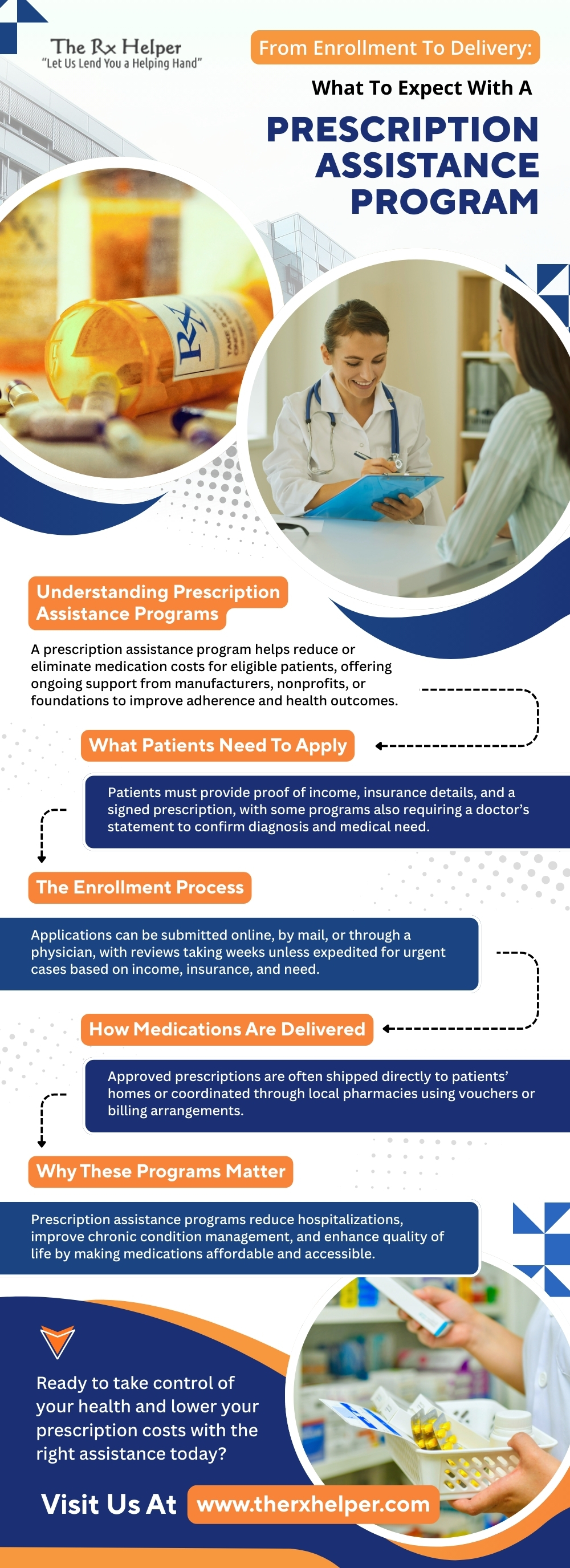
Understanding Prescription Assistance Programs
A Prescription Assistance Program is designed to reduce or even eliminate the cost of expensive medications for eligible patients. These programs are typically funded by drug manufacturers, non-profit organizations, or foundations.
Unlike a one-time coupon, a PAP can offer ongoing support, ensuring steady access to drugs like Cymbalta or Advair without forcing families into financial strain. Studies have shown that such programs improve adherence rates significantly, which leads to better health outcomes overall.
What Patients Need to Apply
To begin the enrollment process, patients must provide documentation that demonstrates both medical need and financial eligibility. This typically includes proof of income such as tax returns or pay stubs, insurance information, and a prescription signed by a licensed healthcare provider. Many programs also require a doctor’s statement verifying the diagnosis and need for the medication.
These requirements may feel intimidating, but they exist to ensure fair access to assistance. Patients who work with a patient prescription assistance company often find the process smoother since these organizations help complete and submit paperwork correctly.
The Enrollment Process
Once the documents are ready, the application can be submitted online, by mail, or through a prescribing physician. Enrollment usually takes several weeks, though some programs provide expedited review in urgent cases. During this period, the application is assessed for eligibility based on income, insurance status, and medical need.
How Medications Are Delivered
One of the most common concerns patients have is how they will actually receive their medication. In many cases, approved prescriptions are shipped directly to the patient’s home through mail-order delivery. Some programs, however, coordinate with local pharmacies, providing vouchers or billing arrangements that allow patients to pick up their medication in person.
Why These Programs Matter
The importance of these programs extends far beyond cost savings. Access to affordable medication reduces the likelihood of hospitalizations, improves chronic disease management, and enhances overall quality of life. Patients using assistance programs are significantly more likely to adhere to prescribed treatment regimens.
By bridging the gap between unaffordable retail prices and patients’ actual needs, prescription assistance programs provide security for individuals and families navigating an increasingly complex healthcare system.

Understanding the process of a prescription assistance program, from enrollment to medication delivery, shows just how impactful these services can be for patients managing chronic conditions. By streamlining paperwork, verifying eligibility, and ensuring prescriptions arrive at your doorstep, these programs take the stress out of staying on track with your treatment plan.
Here’s where The RX Helper proves to be a great assistance by helping patients connect to such programs. As a trusted resource for the uninsured and underinsured, we connect patients with over 1,500 FDA-approved medications through top medication assistance programs.
Our team takes care of the entire journey, so you never have to worry about missing doses or dealing with confusing applications. With personalized support and a proven system, we make affordable healthcare a reality.
If you’re ready to take control of your health and lower your costs, contact us today and discover how prescription assistance can simplify your path to better treatment.